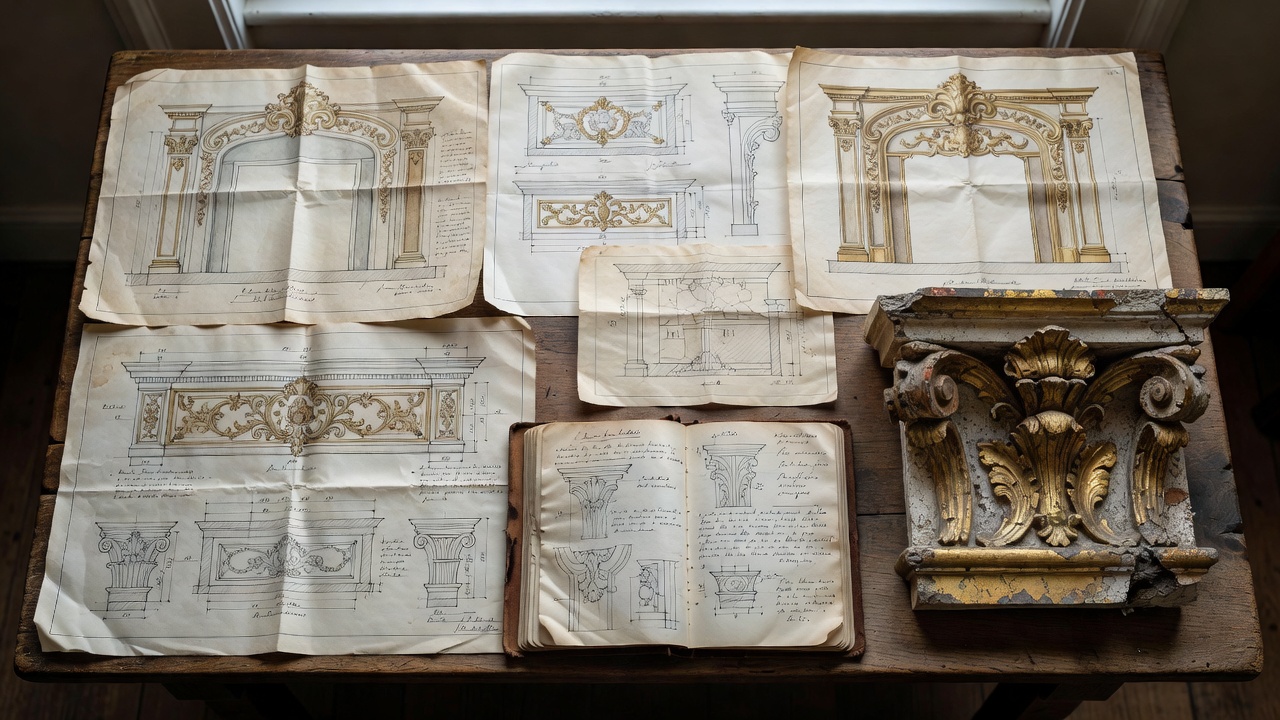
What survives: assemble the evidence before the brief
Begin with an inventory of what is already known. List drawings, photographs, maintenance records, previous surveys, consent documents and collections held elsewhere. Identify their owners, dates, formats and any restrictions on use. An old plan may describe an intended alteration rather than work actually carried out, so compare documentary evidence with the building.
A statement of significance should explain why particular fabric, spaces, associations and uses matter. Avoid a hierarchy based only on visual richness. An undecorated scene dock may explain the operation of the theatre more clearly than a restored foyer. Describe the relationship between values and physical evidence, and make contested interpretations visible rather than smoothing them into a single authoritative voice.
The ICOMOS Venice Charter, the Australia ICOMOS Burra Charter and Historic England’s Conservation Principles are useful frameworks for thinking about evidence and cultural significance. They arose in different contexts and should not be treated as interchangeable law. BS 7913 provides a relevant British conservation framework. Establish which policies, designation controls and permissions actually apply to the project.
What changes: record decisions as they happen
A record assembled only at practical completion will miss much of the reasoning. Set up a decision register early. For each significant intervention, identify the problem, the evidence considered, alternatives, expected impacts, approving parties and unresolved questions. Link the entry to drawings and photographs through stable identifiers. Record revisions without silently replacing the previous rationale.
Separate observation, interpretation and proposal. “Three redundant fixing holes are visible” is an observation; “they probably supported an earlier bracket” is an interpretation. “Reuse the position for a new support” is a proposal needing assessment. This separation helps future readers judge new evidence without having to unravel assumptions embedded in apparently factual descriptions.
When discoveries change the project, update the significance assessment as well as the construction information. A concealed finish or surviving timber assembly may alter the balance between options. Record who examined the discovery, what access was possible and whether any immediate protective measures were taken. Make sure contractual urgency does not erase the evidence trail.
Make the archive readable, not merely large
Agree naming conventions and identifiers before thousands of files accumulate. Each photograph should connect to a location, date, subject and author. Keep originals as well as edited working copies. Record copyright and permissions. A folder called “final photographs” is less useful than a clear index explaining what each sequence shows and which drawings locate it.
Digital models can be valuable, but do not make them the only route to critical information. Preserve readable exports, schedules and a concise guide to the archive. Consider software dependence, file integrity, backup responsibility and eventual migration. A storage drive handed to an operator without an inventory or access instructions is not a completed archive.
| Record | Why it matters | Useful connection |
|---|---|---|
| Condition map | Creates a comparison baseline | Photographs and inspection dates |
| Intervention register | Explains changes and materials | Approvals and treatment reports |
| Maintenance plan | Turns evidence into care | Named roles and review triggers |
Collections also need physical care. Samples, fragments and removed components should have a documented reason for retention, a location and appropriate storage conditions. Consult an archive or collections specialist about long-term deposit. Do not keep unidentified material indefinitely simply because disposal feels uncomfortable; equally, do not discard evidence without an agreed assessment.
What gets carried forward: stewardship after reopening
The handover should identify inspection responsibilities, safe access requirements and the signs that call for specialist advice. Distinguish routine observation by staff from professional inspection. Record who updates the archive after maintenance, new productions or later alterations. An operational theatre changes continuously; its conservation record should remain a living resource without losing previous versions.
Build a short orientation document for a new custodian. Explain the building’s key sensitivities, the archive structure, outstanding risks and relevant contacts. Include areas not surveyed and assumptions that need future checking. This summary does not replace specialist reports; it makes them discoverable before an avoidable mistake occurs.
The V&A’s Theatre and Performance collections and the Theatres Trust are useful reference points for the wider value of theatre documentation. The SPAB also offers a strong tradition of care through maintenance. Our editorial synthesis is simple: a successful project leaves both the building and its evidence more intelligible. The next team should be able to understand not just what was done, but why restraint sometimes mattered more than visible change.
Reference points
- ICOMOS — the Venice Charter and wider conservation doctrine.
- Australia ICOMOS — the Burra Charter and practice resources.
- Historic England — Conservation Principles and recording guidance.
- Victoria and Albert Museum — Theatre and Performance collections.
- Society for the Protection of Ancient Buildings — repair philosophy and maintenance resources.