What survives: an interior with several dates
The most visible colour scheme is not necessarily the earliest, and the earliest scheme is not automatically the most significant. A later refurbishment may be associated with a celebrated period of performance, a change in audience or an important designer. Establish a chronology using archival descriptions, photographs, building accounts and specialist examination. Explain where the evidence agrees and where it does not.
Paint analysis can help identify sequences of decoration, but a sample represents a location, not an entire auditorium. Interpretation depends on the sample’s context and on what earlier preparation may have removed. Coordinate investigations so that representative areas, repairs and junctions are understood together. Sampling should be proportionate, authorised and undertaken by an appropriately qualified specialist.
The Royal Opera House and the Royal Albert Hall offer familiar examples of performance buildings whose interiors have evolved alongside technical and audience requirements. Their institutional histories are useful starting points, not treatment manuals. The Alexandra Palace Theatre offers a different discussion around retained surface character. Our comparison concerns conservation questions; it does not claim that these buildings share materials or adopted identical policies.
What changes: first understand the support
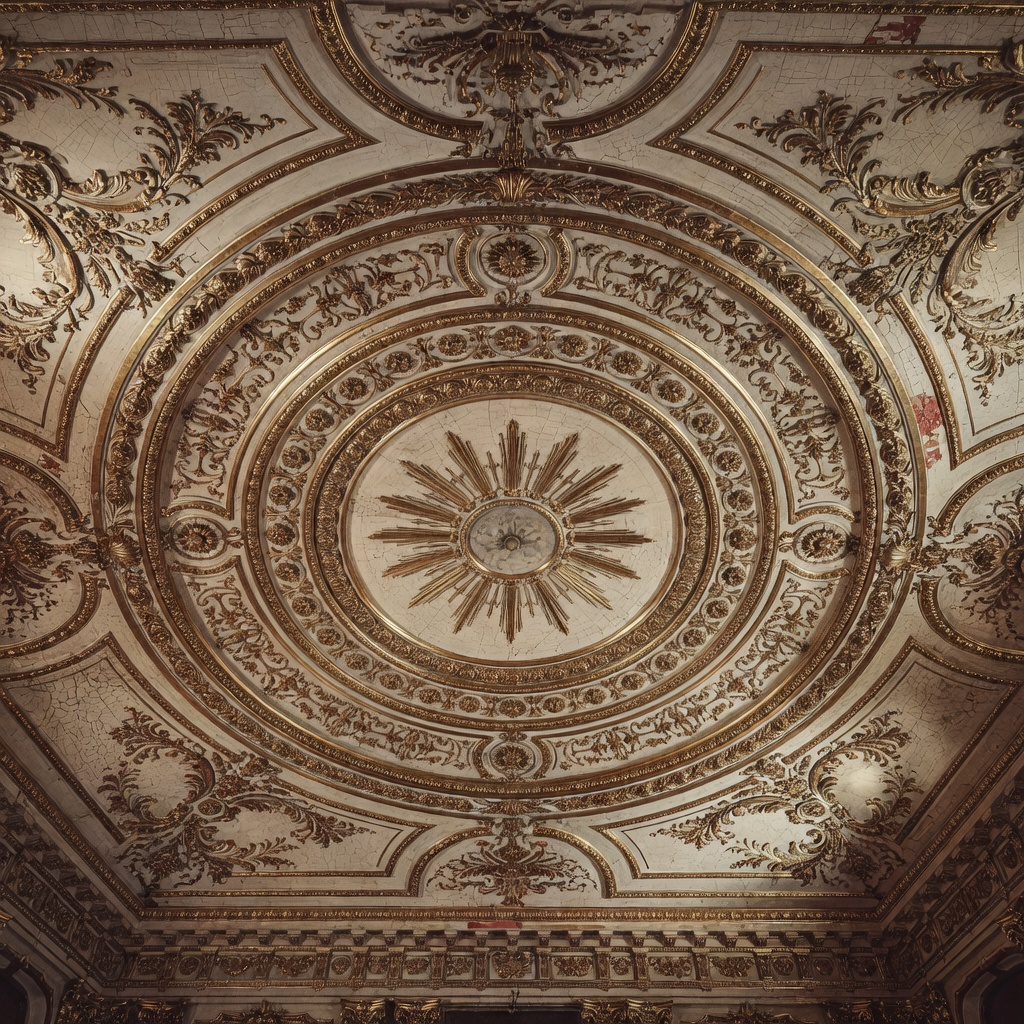
Decorative plaster can conceal complex construction. Fibrous plaster may depend on timber, fabric reinforcement, wires and attachments that are not visible from the stalls. A visually complete ceiling may therefore need specialist investigation above it. Surface cracks alone cannot establish the security of an overhead assembly, and a decorative survey is not a substitute for a competent structural and fixing assessment.
Historic England’s guidance on historic fibrous plaster is a useful reference in England. The Association of British Theatre Technicians also provides a relevant professional context for theatre safety. Project teams should agree access arrangements, inspection scope and responsibility for reporting urgent findings. Do not allow a cleaning or repainting programme to conceal a support problem that has not been investigated.
Moisture requires the same discipline. A stain may be a historic trace, an active leak or evidence of condensation. Repainting without identifying the source can hide useful warning signs. Investigate the building envelope, services and local environmental conditions before specifying finishes. The appropriate repair may sit above the ceiling rather than on its face.
Test the smallest credible intervention
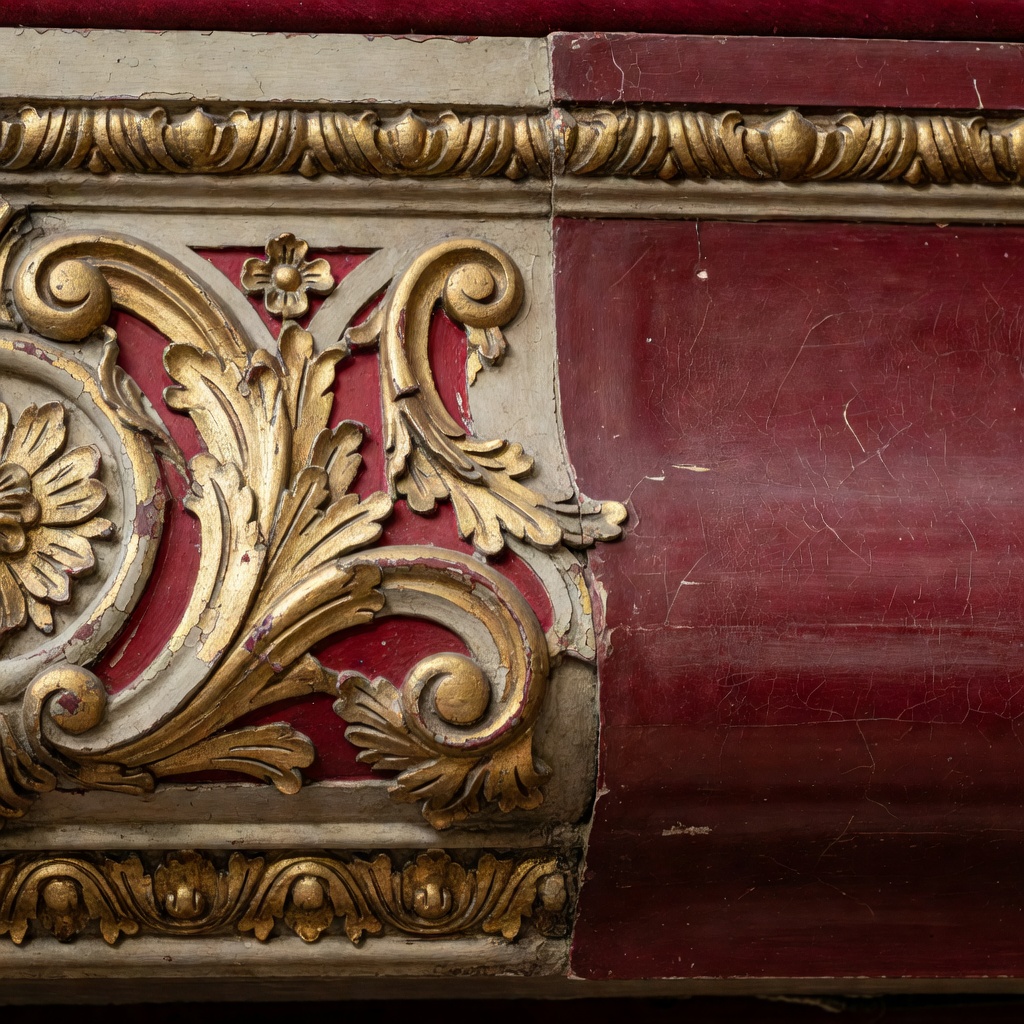
Cleaning can alter texture, sheen and the legibility of previous work. Gilding, metallic paints, distemper and later coatings respond differently. There is no universal safe cleaning recipe. Specialists should define a testing strategy, document observations and agree a stopping point before extending treatment. A successful test does not justify uncontrolled repetition across dissimilar areas.
Missing ornament poses another decision. Replication may restore a legible composition where evidence is strong; where evidence is weak, it may invent history. Consider whether loss should remain visible, be quietly toned or be reinstated with a documented distinction between new and old. Existing fragments and reliable profiles carry more authority than a vaguely similar motif from another building.
| Option | Purpose | Record required |
|---|---|---|
| Stabilise and retain | Protect surviving material | Condition, treatment and remaining vulnerability |
| Selective cleaning | Improve legibility without overexposure | Test locations, materials and agreed limits |
| Documented reinstatement | Recover an evidenced composition | Source evidence and extent of new work |
Textiles and seating finishes also affect the wider room. Replacing upholstery can change acoustic absorption, fire performance and the reading of the decorative scheme. Coordinate specialist conservation advice with current safety requirements and the performance brief. The right colour alone does not make a replacement appropriate.
What gets recorded: the layers left behind
Record the areas investigated, the sample locations and the reasoning behind each treatment. Keep before, during and after photographs with scale, orientation and consistent identifiers. Describe products precisely enough for future conservators to recognise what was applied, while retaining the original specialist reports and technical documentation.
Include what was deliberately left untreated. An untouched area may preserve evidence for future methods or demonstrate the extent of a previous finish. If a hidden witness area is retained, locate it securely in the archive and explain how it can be accessed without damage. Avoid public labelling that encourages visitors to touch fragile material.
The final maintenance plan should make inspection realistic. Identify signs that require specialist attention, define suitable housekeeping boundaries and explain who receives reports of fresh cracks, stains or detachment. Conservation succeeds not only when a ceiling photographs well at reopening, but when its custodians can recognise change years later.
Reference points
- Historic England — conservation guidance, including historic fibrous plaster.
- Association of British Theatre Technicians — professional theatre technical resources.
- Alexandra Palace, Royal Ballet and Opera and Royal Albert Hall — institutional accounts of their buildings.
- Institute of Conservation — professional conservation information and specialist context.